Your shopping cart is currently empty.
| Subtotal | €0,00 |
| Shipping costs | including VAT, excl. Shipping costs |
| Total | €0,00 |
|---|


23.09.2026
- What is the pH value of the soil?
- Why is pH important for trees?
- What pH value is optimal for trees?
- What happens if the soil is too acidic?
- What happens if the soil is too alkaline?
- How can I recognize an unfavorable pH value?
- Measuring the pH value of the soil: Here's how
- Increase the pH value of the soil
- Lower the pH value of the soil
- Does the water used for watering affect the pH value?
- pH value and fertilization
- Frequently asked questions about pH levels in trees
The pH value affects how readily various nutrients in the soil are available to the roots. If the soil is too acidic or too alkaline for a particular tree species, certain nutrients may be absorbed less effectively, even if there are actually sufficient amounts of them present in the soil.
But what pH level is optimal for trees? How can you measure the pH level of your soil? And what can you do if the level is too high or too low?
This article explains why pH is important for trees and how you can create good conditions for your tree with healthy soil.
What is the pH value of the soil?
The pH value indicates how acidic or alkaline a solution is. For soils, this is determined by testing a soil sample with water or a special salt solution.
The pH scale ranges from 0 to 14:
- pH value below 7: acidic
- pH value 7: neutral
- pH value above 7: alkaline or basic
It's important to know that the scale is logarithmic. Soil with a pH of 5 is therefore not simply a little more acidic than soil with a pH of 6.
The pH value of a soil is influenced by factors including the parent rock, soil type, precipitation, and various biological and chemical processes. Management practices, fertilization, and liming can also alter the pH value in the long term.
Why is pH important for trees?
Trees need various nutrients in addition to water, light, and carbon dioxide. These include, for example, nitrogen, phosphorus, potassium, magnesium, calcium, iron, and manganese. These nutrients must be in a form that the tree can absorb through its roots.
The chemical availability of various nutrients changes depending on the pH value. At a high pH value, for example, iron and manganese may be less available. A tree can therefore develop symptoms of a nutrient deficiency even though there is generally enough of the element in question in the soil.
Highly acidic soils can also be problematic. Under strongly acidic conditions, certain nutrients can be more easily leached out, while other elements become more soluble.
Furthermore, the pH value influences the activity of many soil organisms and thus processes such as the degradation of organic matter and the provision of nutrients.
The pH value is therefore an important component of a complex system. For a healthy tree, other factors such as soil structure, water supply, oxygen supply, humus content, and soil life also play a crucial role.
What pH value is optimal for trees?
There is no single optimal pH value for all trees. Many garden plants thrive in slightly acidic to neutral soil. A pH value around 6 to 7 offers favorable conditions for numerous plants. However, some tree species are adapted to significantly more acidic soils, while others also grow well in calcareous and alkaline locations.
Therefore, when assessing the pH value, you should always take the specific tree species into account.
Soil type also plays a role. For example, sandy soil behaves differently than clay-rich soil. Therefore, general pH values should always be understood as a guideline and not as rigid limits.
Instead of focusing solely on a single pH value when choosing a tree, it is worthwhile to consider the natural site requirements of the respective species.
They prefer or tolerate, for example, rather acidic to slightly acidic locations:
- various birch species
- sweet chestnut
- American red oak
- various conifers
Among others, the following plants thrive in calcareous or more alkaline soils:
- field maple
- Norway maple
- Hornbeam
- various linden tree species
- many Prunus species
Therefore, if you want to plant a new tree, it is usually more sensible to choose a tree species that is suitable for the existing soil than to artificially adapt the soil to the requirements of an unsuitable tree over the years.
What happens if the soil is too acidic?
At low pH levels, the availability of various nutrients changes. Under highly acidic conditions, for example, calcium, magnesium, and potassium can be more easily leached out. At the same time, the activity of certain soil organisms can decrease. Phosphorus can also be less available to plants at very low pH levels.
What happens if the soil is too alkaline?
A high pH value can also impair a tree's nutrient supply. The reduced availability of iron in alkaline or calcareous soils is particularly well-known. While iron may be present in the soil, it is sometimes in forms that the roots cannot adequately absorb.
One possible consequence is so-called iron chlorosis. Typically, the leaf tissue turns yellowish, while the leaf veins initially remain significantly greener. Iron deficiency often first becomes apparent on younger leaves.
The availability of other trace elements such as manganese may also be limited at high pH values.
This also means that simply adding more fertilizer won't necessarily solve the problem. If the nutrient is poorly available to the roots due to soil chemistry, the underlying cause must first be understood.
How can I recognize an unfavorable pH value?
An unfavorable soil pH can manifest itself indirectly through various symptoms. These can include:
- yellowish or unusually pale leaves
- Chlorosis between the leaf veins
- smaller leaves
- weak shoot growth
- reduced vitality
- In cases of severe and persistent problems, also dead shoot tips.
These symptoms can also be caused by, for example, drought stress, waterlogging, compacted soil, damaged roots, diseases, or an actual Nutritional deficiency caused.
Therefore, you should not decide whether to lime, acidify, or fertilize the soil solely based on the leaves.
If you suspect that the pH level plays a role, you should measure it first.
Measuring the pH value of the soil: Here's how
For an initial assessment, you can determine the pH value using a soil test kit from a garden center or hardware store. Such tests are relatively inexpensive and usually sufficient for a rough estimate. It's important to use a soil sample that is as representative as possible.
To do this, take small amounts of soil from several locations around the tree's root zone and mix them together. First, remove any coarse organic material such as leaves or mulch from the surface.
Then you perform the test according to the instructions of the respective manufacturer.
If you want to assess your soil more precisely – for example, because your tree is showing clear signs of deficiencies – a professional soil analysis can be useful. Depending on the specific test, it provides information about nutrient content and soil properties in addition to the pH value.
Important: If you have recently limed, fertilized, or added large amounts of organic material, you should wait before taking the measurement. Such actions can temporarily affect the result.
Increasing the pH value of the soil: What to do if the soil is acidic?
If the soil is indeed too acidic for your tree, the pH value can be raised by liming. The amount of lime needed depends on several factors, including the current pH value, the desired target value, and the soil type. Heavy, clay-rich soils, for example, have a different buffering capacity than light, sandy soils. Therefore, you shouldn't lime without careful consideration. A soil analysis is advisable before applying a significant amount of lime. This will allow you to determine the appropriate amount for your specific soil.
Lowering the pH level of the soil: What to do in case of alkaline soil?
Making alkaline soil permanently more acidic can be difficult. Soils rich in lime, in particular, have a high buffering capacity. Therefore, measures that show a short-term effect do not necessarily permanently alter the pH value of the entire root zone of a tree.
Elemental sulfur is used in horticulture, among other methods, to deliberately lower the pH value. Soil organisms gradually convert it, thereby acidifying the soil. This process takes time and depends on factors such as temperature, soil moisture, and soil type.
In existing large trees, a change in the pH value throughout the entire root zone is only possible to a limited extent anyway.
Therefore, especially before planting a new tree: Choose a tree that is suitable for the existing location.
Caution is advised when using so-called home remedies. Coffee grounds, pine needles, or similar materials are often generally recommended for acidifying the soil. However, their effect on the pH value of established soil is limited and depends heavily on the specific conditions.
Does the irrigation water affect the pH value of the soil?
The type of water used can also have a long-term impact on soil chemistry. The pH value of the water is not the only decisive factor. The amount of bicarbonate or carbonates the water contains is also particularly important. Hard, calcareous tap water, when used regularly for irrigation, can contribute to the accumulation of alkaline components in the soil.
Rainwater usually contains significantly fewer of these minerals and is therefore particularly suitable for watering many garden plants.
However, this doesn't mean you should never water your tree with tap water. Large trees, in particular, need significant amounts of water during dry periods. Adequate watering is then more important than watering too little out of concern about hard water.
If you live in a region with very hard tap water and cultivate sensitive plants in calcareous soils, water quality can be an additional factor worth considering. All the more reason to collect rainwater for watering trees.
pH value and fertilization: Why more fertilizer doesn't always help
If a tree shows yellow leaves or is growing slowly, reaching for fertilizer seems like the obvious solution. But before you fertilize, you should try to find out what your tree actually needs.
Because a perceived nutrient deficiency can have various causes:
- There is indeed too little of one nutrient in the soil.
- The nutrient is present, but poorly available due to the pH level.
- The roots cannot absorb sufficient nutrients due to drought, waterlogging, or soil compaction.
- The roots were damaged.
- Other site conditions negatively affect the tree.
Additional fertilizer does not automatically help, and unnecessary or excessive fertilization can put additional strain on the soil and tree.
Healthy soil is more than the sum of its individual nutrients. Soil structure, water, air, soil organisms, organic matter, and pH value all interact. Therefore, if you want to strengthen your tree in the long term, it's worthwhile to consider the soil as a whole, rather than simply adding individual nutrients. You can find more information in the article. Properly caring for trees: the interplay of water, soil and nutrients.
Frequently asked questions about pH levels in trees
What pH value is optimal for trees?
It depends on the tree species. Many trees and shrubs thrive in slightly acidic to neutral soils, while others prefer acidic or calcareous locations. Therefore, there is no universally optimal pH value for all trees.
How can I measure the pH value of my soil?
For an initial assessment, you can use a pH soil test kit from a garden center. For a more precise evaluation, a professional soil analysis is recommended.
How can I increase the pH level of the soil?
Acidic soils can be made more acidic by liming. However, the required amount depends on the soil type, the initial pH value, and the desired target value. Therefore, the soil should be tested first.
How can I lower the pH level of the soil?
Elemental sulfur can be used, among other things, for targeted acidification. The change occurs slowly and should be carried out in a controlled manner. A sustained reduction in acidity can be difficult in highly calcareous soils.
Is hard tap water bad for trees?
Not necessarily. Many tree species cope well with it. However, with regular irrigation using highly calcareous water, the water quality can affect soil chemistry in the long term. Rainwater is a good alternative for many plants.
Natural fertilization and activation of soil life
The power of the soil

Offer -35%
Baumbad liquid fertilizer made from worm compost, 3 liters - NPK 1-1-1
liquid fertilizer
€24,99 €38,97

Offer -23%
Baumbad Liquid Fertilizer Vermicompost 1 Liter / Worm Compost Tree Fertilizer NPK 1-1-1
liquid fertilizer
€9,99 €12,99

Offer -11%
Baumbad Premium Liquid Fertilizer made from worm compost, 5 liters - NPK 1-1-1
liquid fertilizer
€39,99 €44,99

Offer -29%
Baumbad Liquid Fertilizer - Vital Bath - Regeneration for Damaged Trees 5 Liter
liquid fertilizer
€39,99 €56,49

Offer -34%
Baumbad Liquid Fertilizer - Vital Bath - Regeneration for Damaged Trees 3 Liter
liquid fertilizer
€24,99 €37,99

Offer -25%
Baumbad Liquid Fertilizer - Vital Bath - Regeneration for Damaged Trees 1 Liter
liquid fertilizer
€9,99 €13,49
Tips, knowledge and practical advice for strong trees
Discover more posts
Trees need nutrients to grow healthily. In many gardens or cities, these nutrients are lacking in the soil, for example, because leaves are removed or the soil is heavily used. Appropriate fertilization can help improve the soil and support tree growth. However, it's important not to fertilize simply "on a hunch," as some soils already contain sufficient nutrients.
Organic fertilizers like compost or worm castings work more slowly, but improve the soil in the long term and promote soil life. Mineral fertilizers work faster, but usually only provide individual nutrients. For many trees, organic fertilization is the more sustainable solution in the long run.
Yes, that can be very helpful. A soil sample can determine which nutrients are present in the soil and which are lacking. The pH value is also measured. This allows you to fertilize the tree precisely and avoid over-fertilizing. A simple soil analysis usually only costs around [price missing]. €20–40.
A nutrient deficiency can manifest itself, for example, through yellow or pale leaves, weak growth or few flowers show. However, similar symptoms can also be caused by drought or compacted soil These problems arise. Therefore, you should always check first whether the tree is getting enough water.
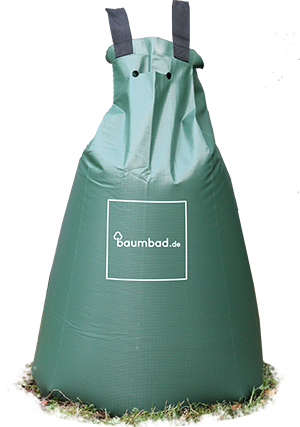
Yes, that's possible. Irrigation bags release water slowly into the soil. When liquid fertilizer is mixed with water, it reaches the root zone evenly. This way, a large portion of the soil around the tree comes into contact with the nutrient solution.
The best time to fertilize is usually in spring and early summerFertilizing is best when the tree is growing and producing new leaves. During this phase, the tree can absorb nutrients particularly well. Very late fertilization in autumn is usually not advisable.
The soil is home to many microorganisms, such as bacteria, fungi, and earthworms. They break down organic matter and make nutrients available to plants. Active soil life therefore helps trees absorb water and nutrients more effectively. Organic fertilizers can support this soil life.
Great idea, easy handling and everything from ordering to delivery.
Michael K.